Quick answer: run a 3/0 to 7/0 circle hook for channel cats, a 5/0 to 8/0 for blues of any decent size, and a 10/0 to 12/0 for flatheads. For a true trophy fish it is an 11/0 or a 12/0, nothing smaller. Bait size and the mouth size of the fish you are after are what decide it, not just how big the fish is, because a big bait needs a hook with a big wide gap.
Few things will get a debate going at the bait shop faster than asking what size circle hook you should use for catfish. Everybody's got an opinion! So let me just cut to it and give you mine right up front, then I'll explain how I got there.
For channel cats I run a 3/0 to 7/0. A 3/0 is right for pan sized channels, and if you're targeting trophy channel cats bump up to at least a 5/0. If there are blue cats of any decent size in your water, a 5/0 is my minimum and I'll go up to an 8/0. For monster blues that's an 8/0 to 12/0. Flatheads eat big live baits, and big live baits need big hooks, so I'm on a 10/0 to 12/0 for them. And when I'm hunting a true trophy, it's an 11/0 or a 12/0 only. That's the short answer. Now lets talk about why, because picking a hook size is not as simple as bigger fish means bigger hook.
Match the Hook to the Bait and the Jaw, Not Just the Fish

GEAR MENTIONED IN THIS POST
Atko Beast Slayer Circle Hooks
High carbon steel circle hooks, #1 through 12/0. Used to set IGFA World Records.
From $5.50
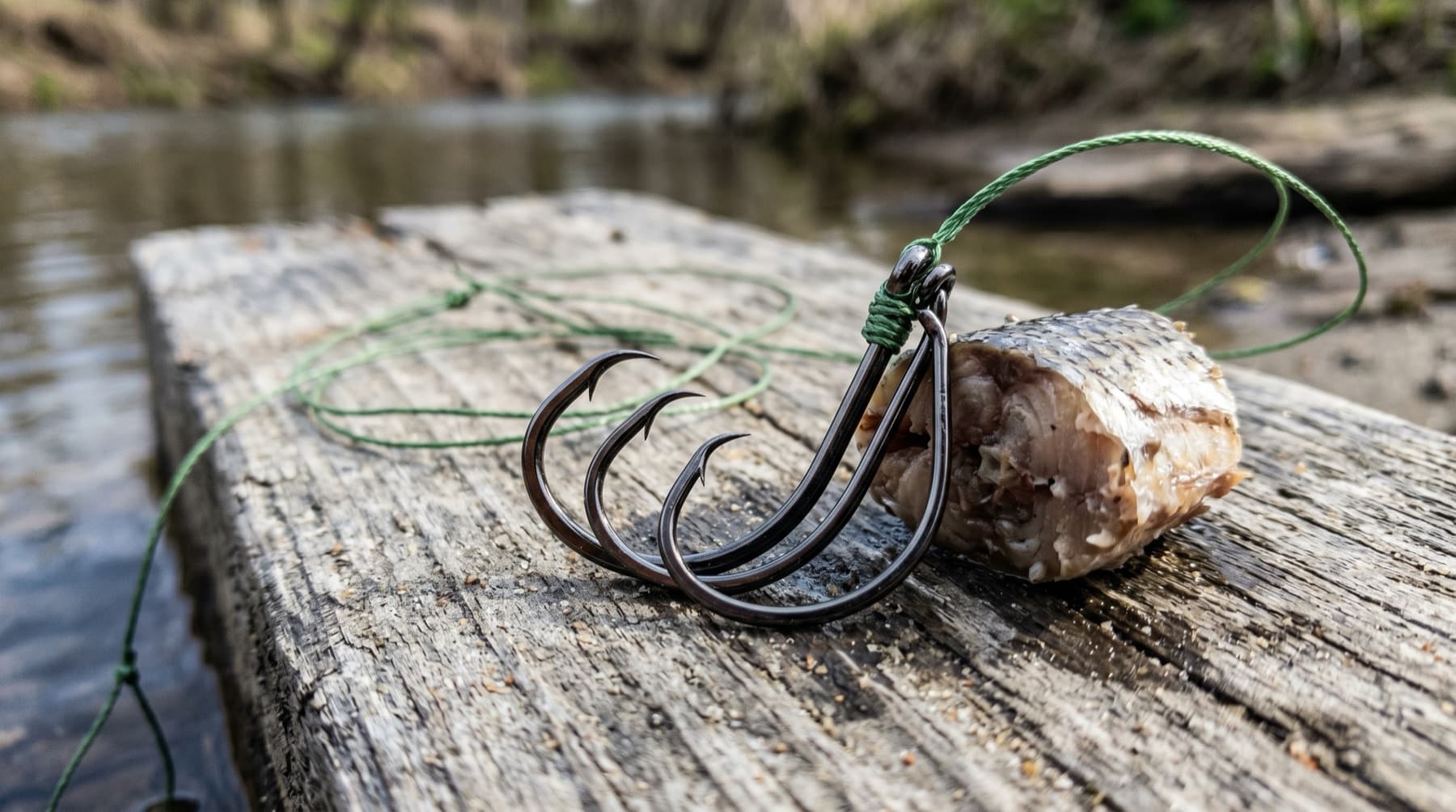
Here's the mistake I see a lot of fishermen make. They don't match the circle hook size to the bait size. It's very important that the hook is exposed and not buried in the bait, unless you're fishing something extremely soft like nightcrawlers or peeled shrimp. Hook size really comes down to two things: the size of your BAIT and the jaw size of the fish you're after.
Think about it. If you're threading a small piece of cut shad or a nightcrawler for channel cats, a giant 10/0 hook is going to be buried in bait with no point exposed. You'll get bit and never hook up, and you'll swear catfish have lips of steel. They don't. Your hook was just smothered.
So I size my hook to leave the point and gap clear of the bait. Small baits get smaller hooks. A big gob of cut skipjack or a live bluegill needs a big wide gap hook so the point can do its job. Get this one thing right and your hook up ratio will jump overnight.
My Go To Sizes by Situation
Let me break down exactly what I reach for. You can see the full lineup over on our circle hooks page, but here's how I pick.
For channel catfish on cut bait, worms, or punch bait, a 3/0 to 7/0 Beast Slayer circle hook covers it. A 3/0 is plenty for pan sized channels. If you're after the trophy channel cats, start at a 5/0.
If there are blue cats of any decent size in your water, a 5/0 is my minimum and an 8/0 is the top end. That window is the most useful all around catfish hook size there is, and if you only bought one size it would come out of it. For the monster blues I'm on an 8/0 to 12/0. Flatheads are their own thing. They eat big live baits, and big live baits need big hooks, so I bump up to a 10/0 to 12/0 and give that bait room to swim.
For trophy hunting, when I'm soaking big live or cut baits hoping for a fish that'll pull drag and make me question my life choices, it's an 11/0 or a 12/0 and nothing smaller. And when I'm chasing the absolute monsters, I'll tie on a Mega Beast Slayer. These things are huge, about the size of your palm, and they're built for fish that eat baits other catfish would be scared of.
These hooks don't only see fresh water either. If you're taking them to the surf or fishing inshore for redfish, black drum, whiting, pompano and the rest, a 2/0 to 8/0 covers just about all of it.
People search for 12/0 and even 14/0 circle hooks all the time, and yeah, those have their place when you're fishing giant baits for giant fish. But for the average angler, you'll spend most of your days in that 5/0 to 8/0 window.
Don't Set the Hook!
This is the part folks struggle with the most when they switch to circle hooks. You do NOT swing for the fences like you would with a J hook. I know, I know, it goes against everything in you.

YOU MIGHT ALSO NEED
Atko Reaper Monofilament Leader
Abrasion resistant leader from 2lb to 200lb, for rocks, oyster beds, and heavy structure.
From $10.00
With a circle hook the design does the work. When the fish takes the bait and turns away, the hook slides to the corner of the mouth and rolls into place. All you do is let the rod load up and start reeling steady. If you rear back and try to cross their eyes, you'll pull that hook right out of their mouth before it ever sets.
I actually wrote a whole post on getting killer success with circle hooks if you want to go deeper, because there's a real technique to it. But the number one rule is hands off until that rod doubles over.
A Quick Word on the Rest of Your Rig
Your hook is only as good as what it's tied to. I run Atko Leviathan braid for my mainline because it has zero stretch, which means I feel everything and the circle hook does its job cleanly. I'll often add a section of Reaper mono leader for a little abrasion resistance and a touch of stretch right at the business end. If you've never tied braid to mono with confidence, my foolproof FG knot walks you right through it.
Get your hook size matched to your bait, keep the points sharp, and quit setting the hook. Do those three things and I promise your catfish numbers go up. And when you're ready to test your rig against other catmen, go read up on finding catfish tournaments near me. Give it a try and let me know how it works for you in the comments.
Tightlines,
Jason Atkins